Hello there!

Hello there!

Welcome to AgentMY.online, a corporate website of AgentMY Online (Sarawak) Sdn Bhd 202301041605 (1535524-W). This is a ONE-STOP center for various platforms designed to help agents in their businesses. Therefore, our tagline is “A Place for Agents” and our slogan is “Advertising for Agents”.

This is a platform company – an advertising and marketing consultancy firm which targets agents and salespersons who ride on social media and digital promotion of various products and services. Our trade licence is “Consultancy and Training Services”. Our key administrator Mr Thomas Sim – a HRD Corp Accredited Trainer (ID 30579) and a graduate technologist in ICT Management. All our websites are built by WordPress – currently 12 of them.

We believe in “People over Product – You are more than what you sell!”

Our objective is to gather agents and negotiators to promote the above philosophy that in time of AI and technology, salespersons are still relevant despite the advancement of technology to replace them.

Our target agents include the major subgroups –

  • financial advisors, unit trust consultants, financial planners, estate planners;
  • insurance agents (general & life), insurance planners;
  • estate agents, negotiators, registered estate agents, probationary estate agents;
  • car sales agents;
  • various small-medium businesses;
  • YouTubers and Influencers (food and services).

Our research and development of digital marketing services are for subscription of agents in Malaysia and surrounding region. They are –

Our education section has developed an online self-study resource center for the qualifying examination under the Board of Valuers, Appraisers, Estate Agents and Property Managers (BOVAEP) – Estate Agent’s Examination.

Education

Weekend Classes on Estate Agent’s Examination – ongoing 2nd intake Class of 2026

Sign up for our Latest Orientation Event here!

  • 10. estateagentexam.com – online resource for Diploma in Estate Agency by BOVAEP – route to qualify as Registered Estate Agent and in the future operate your own firm of estate agency!
  • 11. valuerexam.com – online resource for RISM Property Surveying Examination – Graduate Entry/Direct Final, route to qualify as Registered Valuer, Registered Property Manager and Registered Estate Agent. You can operate your own firm of valuation, property management and estate agency in the future.
  • 12. semangatjayatuition.com – tuition centre for STEM subjects – SPM, STPM, A-Level, UEC, IGCSE & O-Level. Higher competition will be seen in getting into the FTES (Free Tertiary Education Scheme) as Sarawak Government is paying for it. Read more about this here.

For financial and estate planning advisory, we have developed a set of programs for the CFP certification as well.

Our Roadshow Jelajah Sarawak event 2026:

Added second Pick-Up QAB6873A as company identity for Road Show, Jelajah 2.0 25/5/2026 – 31/5/2026.

Feel free to contact us for more information.

  • Thomas Sim E3009
  • Founder
  • 012 – 8866 090
  • Lee Khee Chuan
  • Co-Founder
  • 016 – 8880 138

Sinjun Properties E(3)2077 is a Registered Real Estate Agency Firm – active in and around major townships in Sarawak.

Updated 20 Jul, 2026.

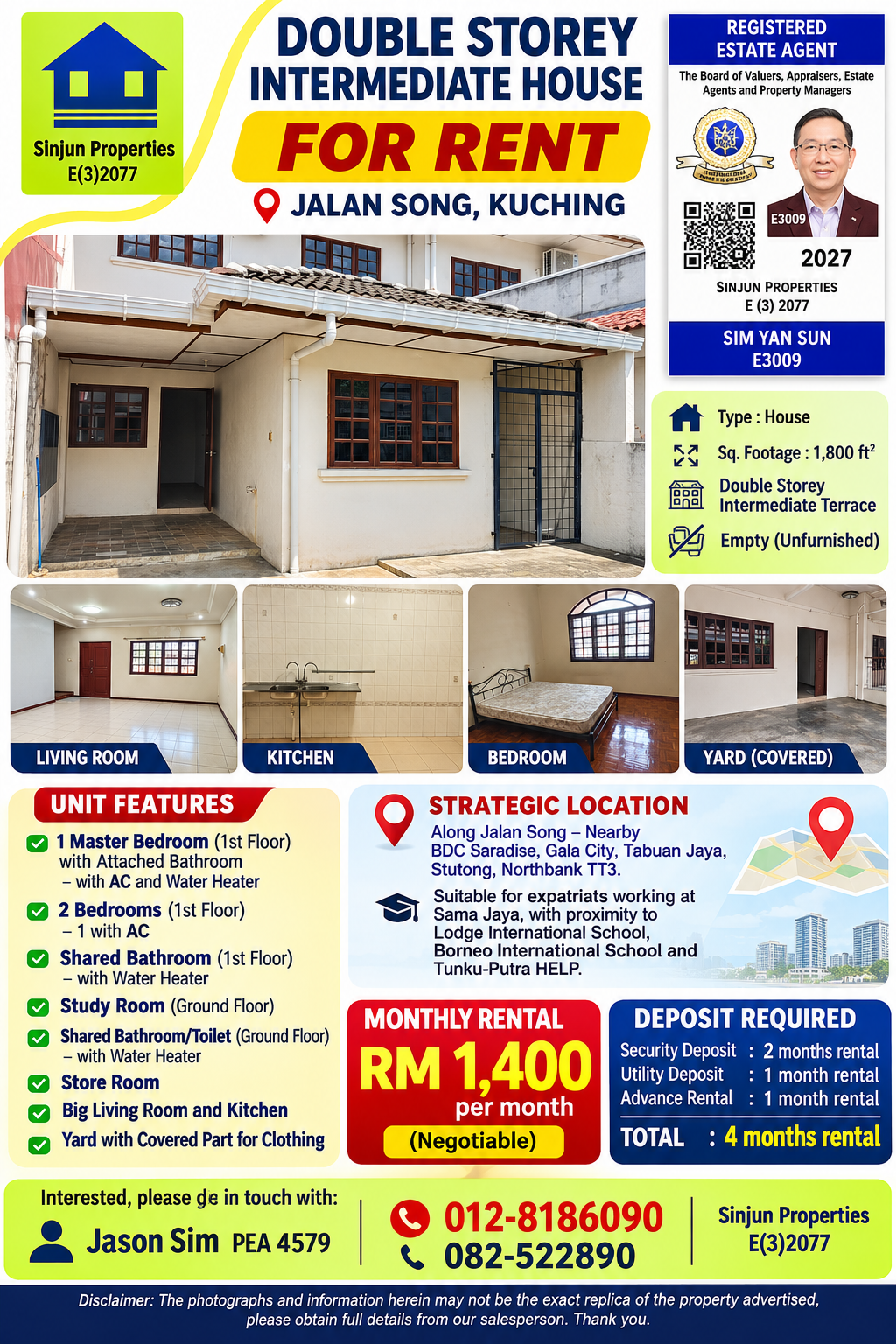
Spacious Double Storey Intermediate House for Rent in Kuching

PROPERTY INFORMATION SUMMARY

1. Property Location
– Property Name: Double Storey Intermediate House
– Address: Not stated in the supplied image
– Neighbourhood: Jalan Song
– Location: Kuching

2. Property Price / Rental Price
– Rental Price: RM 1,400 per month (Negotiable)
– Status: FOR RENT

3. Property Size
– Built-up Area: 1,800 ft²
– Land Area: Not stated in the supplied image

4. Number of Rooms
– Bedrooms: 3 (1 Master Bedroom, 2 Bedrooms)
– Study Room: 1
– Store Room: 1
– Living Room and Kitchen: Big Living Room and Kitchen (Open-plan)

5. Number of Bathrooms and Toilets
– Master Bedroom Attached Bathroom: 1
– Shared Bathroom (First Floor): 1
– Shared Bathroom/Toilet (Ground Floor): 1
– (Total: 3 bathrooms, including attached and shared, toilets included in shared count)

6. Deposit to be Paid
– Security Deposit: 2 months rental
– Utility Deposit: 1 month rental
– Advance Rental: 1 month rental
– TOTAL: 4 months rental

### ADDITIONAL PROPERTY FEATURES
– Property Type: House (Double Storey Intermediate Terrace)
– Furnishing Status: Empty (Unfurnished)
– Number of Car Parks: Yard with Covered Part for Clothing (Car park not explicitly stated; requires confirmation)
– Air Conditioning: Master Bedroom and 1 additional Bedroom with AC
– Water Heater: All bathrooms equipped with water heater
– Living and Dining Areas: Big living room and kitchen
– Kitchen Facilities: Present (see featured image)
– Study Room and Store Room available
– Yard: Covered part for clothing
– Condominium Facilities: Not stated in the supplied image
– Security Features: Not stated in the supplied image

—

For professional property advice and assistance, please contact:

Estate Agent
– Name: Jason Sim
– Professional Designation & Registration Number: PEA 4579
– Mobile Telephone Number: 012-8186090

Estate Agency
– Registered Business Name: Sinjun Properties
– Estate Agency Registration Number: E(3)2077
– Office Telephone Number: 082-522890

(Only details visible in the supplied flyer are included above.)

Disclaimer: The photographs and information herein may not be the exact replica of the property advertised. Please obtain full details from our salesperson. Thank you.

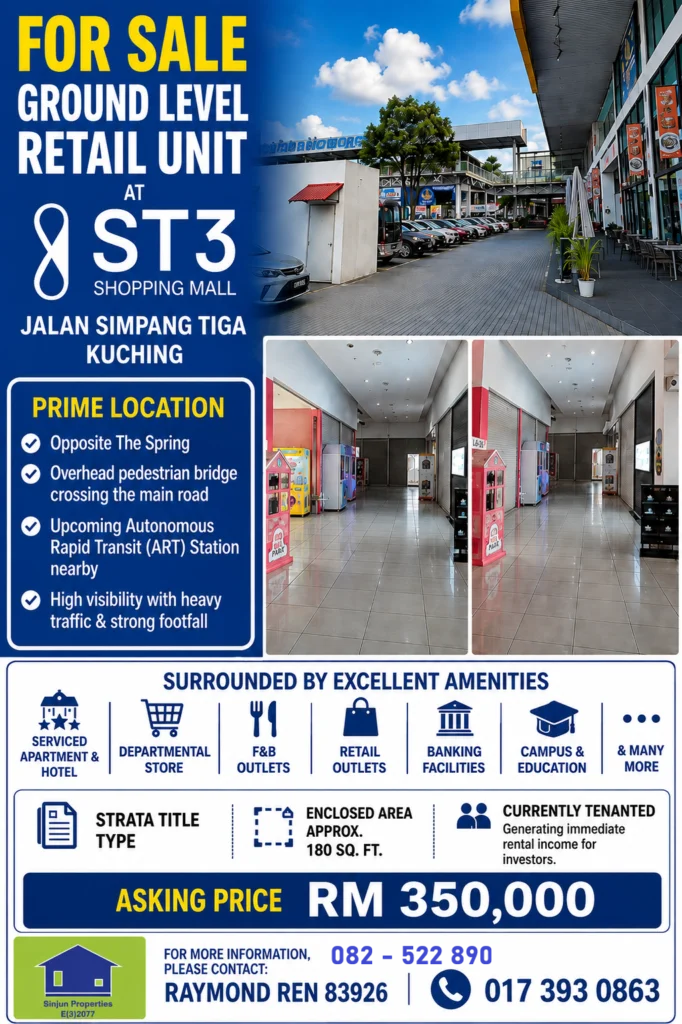
Ground Level Retail Unit for Sale at ST3 Shopping Mall – Kuching

PROPERTY INFORMATION SUMMARY

1. Property Location
– Property Name: Ground Level Retail Unit at ST3 Shopping Mall
– Address: Jalan Simpang Tiga, Kuching
– Neighbourhood: Not stated in the supplied image
– Location: Kuching

2. Property Price / Rental Price
– FOR SALE
– Asking Price: RM 350,000

3. Property Size
– Enclosed Area: Approx. 180 sq. ft.
– Land Area: Not stated in the supplied image

4. Number of Rooms
– Not stated in the supplied image

5. Number of Bathrooms and Toilets
– Not stated in the supplied image

6. Deposit to be Paid
– Not stated in the supplied image

ADDITIONAL PROPERTY FEATURES

– Property Type: Retail Unit (Strata Title Type)
– Furnishing Status: Not stated in the supplied image
– Number of Car Parks: Not stated in the supplied image
– Living and Dining Areas: Not stated in the supplied image
– Kitchen Facilities: Not stated in the supplied image
– Condominium Facilities: Not stated in the supplied image
– Security Features: Not stated in the supplied image
– Additional Notes:
– Currently tenanted (generating immediate rental income for investors)
– Prime location opposite The Spring Shopping Mall
– Accessible via overhead pedestrian bridge
– Upcoming Autonomous Rapid Transit (ART) Station nearby
– High visibility with heavy traffic and strong footfall
– Surrounded by serviced apartments & hotel, departmental store, F&B outlets, retail outlets, banking facilities, campus & education and many more amenities

—

For professional property advice and assistance, please contact:

Agent Details
– Name: Raymond Ren
– Professional Designation and Registration Number: REN 83926
– Mobile Telephone Number: 017 393 0863

Estate Agency Details
– Registered Business Name: Sinjun Properties
– Estate Agency Registration Number: E(3)2077
– Agency Office Telephone Number: 082-522 890

(Website, email address, or other contact details: Not stated in the supplied image)

Disclaimer: The photographs and information herein may not be the exact replica of the property advertised. Please obtain full details from our salesperson. Thank you.

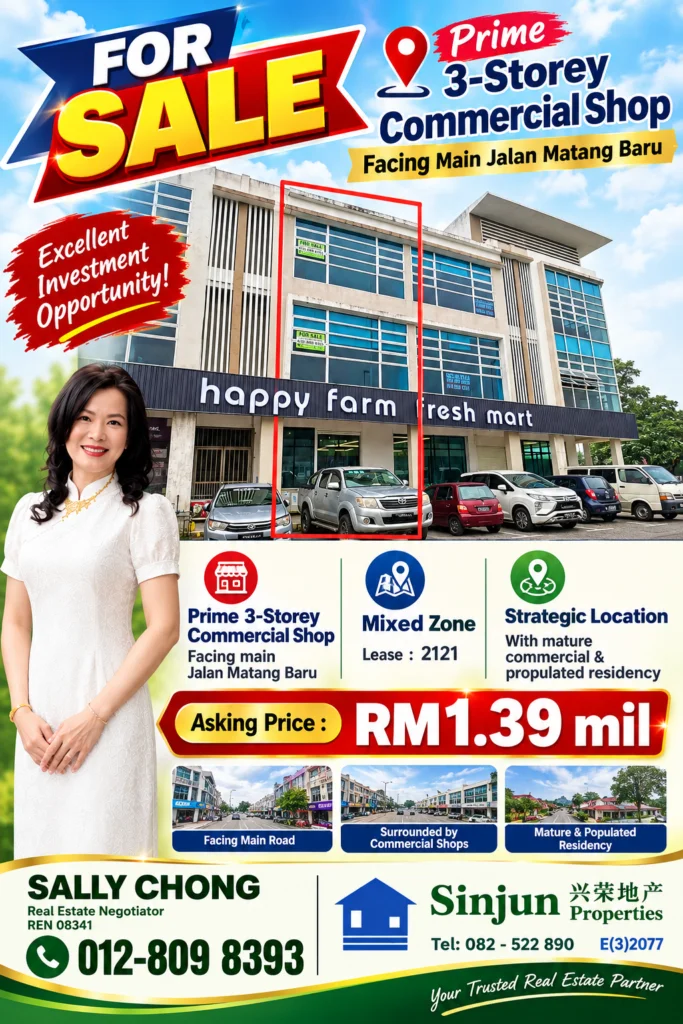
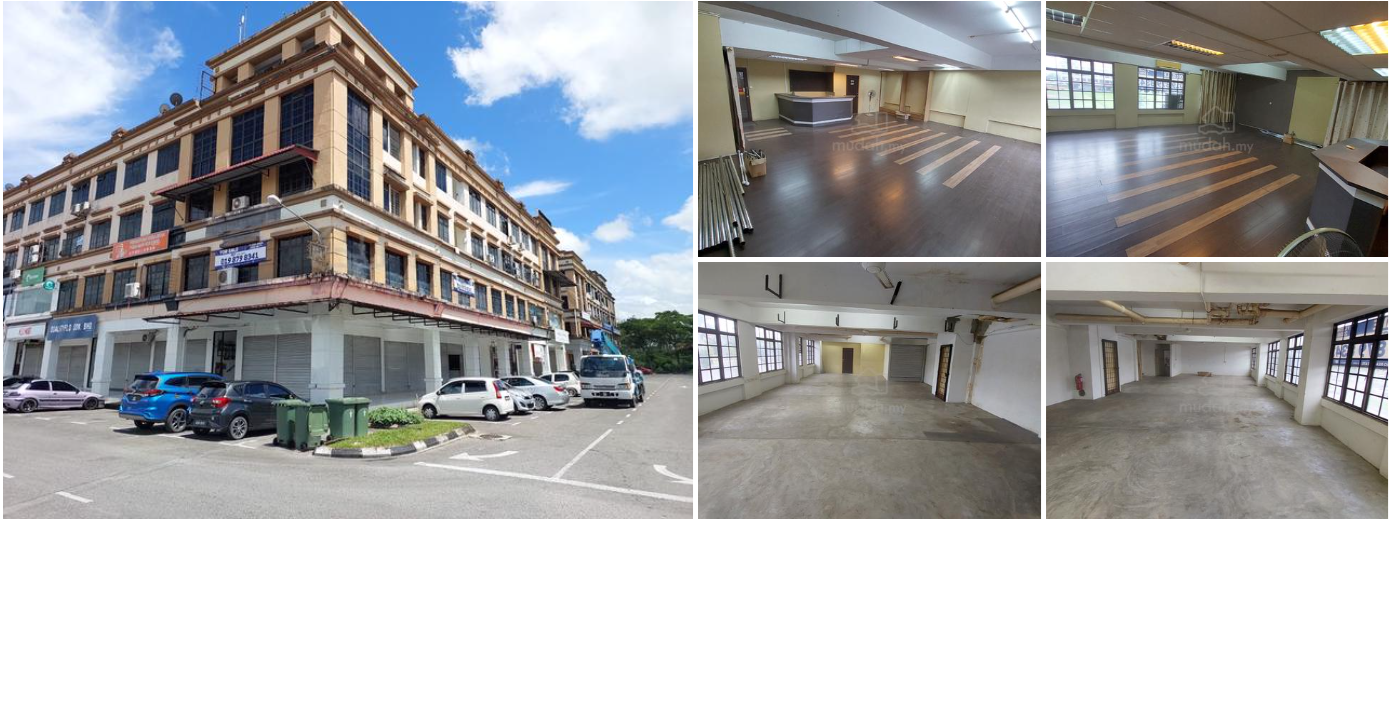
Strategic 3-Storey Commercial Shop For Sale in Jalan Matang Baru

PROPERTY INFORMATION SUMMARY

1. Property Location
– Property name: Not stated in the supplied image
– Address: Not stated in the supplied image
– Neighbourhood: Facing main Jalan Matang Baru
– Location: Not stated in the supplied image

2. Property Price / Rental Price
– Selling Price: RM1.39 mil
– Status: FOR SALE

3. Property Size
– Land area: Not stated in the supplied image
– Built-up area: Not stated in the supplied image

4. Number of Rooms
– Not stated in the supplied image

5. Number of Bathrooms and Toilets
– Not stated in the supplied image

6. Deposit to be Paid
– Not stated in the supplied image

ADDITIONAL PROPERTY FEATURES

– Property type: 3-Storey Commercial Shop
– Furnishing status: Not stated in the supplied image
– Number of car parks: Not stated in the supplied image
– Living and dining areas: Not stated in the supplied image
– Kitchen facilities: Not stated in the supplied image
– Condominium facilities: Not stated in the supplied image
– Security features: Not stated in the supplied image
– Zoning: Mixed Zone
– Lease: Until 2121
– Facing main road
– Surrounded by commercial shops
– Mature & populated residency
– Strategic location

For professional property advice and assistance, please contact:

Estate Agent
– Name: Sally Chong
– Professional designation and registration number: Real Estate Negotiator, REN 08341
– Mobile telephone number: 012-809 8393

Estate Agency
– Registered business name: Sinjun Properties
– Estate agency registration number: E(3)2077
– Agency office telephone number: 082-522 890

(Website, email address, or other contact details: Not stated in the supplied image)

Disclaimer: The photographs and information herein may not be the exact replica of the property advertised. Please obtain full details from our salesperson. Thank you.

Exploring the Sarawak Property Market: Trends and Investment Insights

Exploring the Sarawak Property Market: Trends and Investment Insights

An In-Depth Analysis of Kuching’s Real Estate Landscape and Rental Yields

Introduction

The Sarawak property market is experiencing a dynamic transformation, shaped by local economic drivers and investment opportunities. Particularly in Kuching, trends indicate a blend of residential demand and commercial growth. This article delves into the key aspects of the property market in Sarawak, highlighting investment potential, rental yields, and market shifts to provide valuable insights for investors and property owners alike.

Chapter 1: Overview of the Sarawak Property Market

The Sarawak property market, particularly in Kuching, has exhibited a dynamic landscape shaped by various economic factors. Notably, the region is experiencing population growth, which is driving demand for both residential and commercial properties. The influx of residents can be attributed to job opportunities in sectors such as tourism, agriculture, and local trade, which continue to evolve alongside infrastructural development.

Recent data from the National Property Information Centre (NAPIC) illustrate a steady increase in property transactions, as investors are recognizing Kuching’s potential as a robust property investment hub. The Sarawak government’s commitment to enhancing infrastructure, including transportation networks and utilities, further bolsters this attractiveness. This investment not only enhances the quality of life for residents but also increases property values in the long run.

Despite these positive trends, investors must remain cautious and conduct thorough due diligence. Economic fluctuations, regulatory changes, and environmental considerations are vital in shaping market conditions. Navigating the Sarawak property market necessitates an understanding of these complexities, ensuring that investors can effectively identify opportunities while mitigating risks aligned with their investment strategies.

Chapter 2: Kuching: A Hub for Residential Development

Kuching, as the capital of Sarawak, is experiencing significant growth in its residential property market, driven by rising demand for diverse housing types. The urban landscape, particularly in emerging neighborhoods like Stutong, showcases the growing popularity of landed properties and serviced apartments. This shift reflects a demographic trend where younger families are gravitating towards modern amenities alongside the appeal of community living.

The current market dynamics highlight a noticeable increase in the demand for corner double-storey semi-detached houses, exemplified by properties like those offered at approximately RM 1,600,000 with a built-up area of around 1,600 sq.ft. Such properties often come with substantial land sizes offering more outdoor space, attracting buyers seeking comfort and lifestyle.

Moreover, as rental demand sustains, the current gross rental yields in Kuching can provide advantageous returns for landlords and investors. Recent market analyses indicate that average rental yields hover around 4-6%, depending significantly on location and property type. Investors would do well to consider factors such as property management costs and market saturation, which can impact net yields, especially for residential properties.

As Kuching evolves, continued infrastructure developments and urban planning are set to enhance property values and rental potential. However, prospective investors must stay informed about local regulations and property tenure rights under the Sarawak Land Code, as these factors can substantially influence investment outcomes. Understanding these nuances will enable investors to navigate the complexities of the market effectively.

Overall, while opportunities for capital appreciation exist, they must be weighed against potential risks, such as economic fluctuations and changes in housing demand. Comprehensive market investigations and strategic planning remain essential for seizing the residential investment potential in Kuching’s vibrant and growing property landscape.

Chapter 3: Commercial Property Landscape in Kuching

The commercial property landscape in Kuching has been shaped by the city’s evolving economic backdrop and demographic shifts. As Sarawak’s capital, Kuching serves as a pivotal hub for business activities, influencing the demand for various commercial spaces, including office buildings, retail outlets, and hospitality establishments. Observations indicate a steady upward trend in the requirement for diversified commercial spaces, primarily driven by local employment growth and increased consumer spending.

Current market analyses reveal that office space in Kuching enjoys a moderate occupancy rate, reflecting stable demand. Recent transactional data indicates that rental rates have sustained an upward trajectory, albeit at a measured pace, suggesting resilience even amid broader economic fluctuations. Retail spaces, particularly those positioned in key commercial districts, have reported improved foot traffic, enhancing rental yields as consumer confidence returns.

The hospitality sector, benefitting from an upsurge in domestic tourism, has also displayed promising potential for investors. While market yields in prime locations have averaged between 6% to 8%, it is crucial for potential investors to conduct thorough due diligence. Factors such as location, market demand, and future economic forecasts should be critically assessed to maximize returns and mitigate risks associated with commercial property investments in Kuching.

Chapter 4: Investment Opportunities and Risks in Sarawak

Investing in the Sarawak property market presents a dual-faceted landscape of opportunities and risks. The unique attributes of Kuching, a key urban center in Sarawak, provide a promising environment for residential properties, particularly with the increased demand for quality double-storey semi-detached houses. However, potential investors must navigate local legislation, notably the Sarawak Land Code, which delineates land ownership regulations that can significantly influence investment decisions and financing structures. This includes adherence to policies that dictate leasehold and perpetual titles, which may impact the long-term value and salability of a property.

Maximizing investment returns hinges on understanding rental yields in Kuching. Residential properties, for instance, can offer gross rental yields ranging from 4% to 6%, depending on location and property condition. However, operating costs, including maintenance and management fees, must be factored in to ascertain net yields accurately. Investors should also remain cognizant of market cycles and economic shifts that might affect property values and rental demand. The recent economic climate suggests steady growth but also highlights potential pitfalls, such as oversupply in certain segments or economic downturns linked to broader national trends.

As investors explore opportunities in Kuching, they should not only focus on immediate financial returns but also consider the long-term implications of property ownership and development potential in various sectors, including commercial and industrial properties. With strategic insight and careful consideration of local market dynamics, investors can effectively mitigate risks while capitalizing on the diverse investment offerings in Sarawak’s thriving real estate landscape.

Chapter 5: Future Trends and Directions for Property Investment

The Sarawak property market is poised for a transformative phase as it adapts to shifting socioeconomic conditions and evolving buyer preferences in a post-pandemic landscape. Kuching, as the capital of Sarawak, is likely to see its residential and commercial sectors reconfigured due to urban migration, enhanced digital connectivity, and an increased emphasis on sustainability. Anticipated price adjustments will vary between established areas and emerging neighborhoods, where investor interest may spur revitalization projects.

Proactive planning in property investment is essential; investors should monitor local trends, conduct thorough due diligence, and remain flexible in their strategies. Understanding regional regulations, market demands, and potential technological impacts on property usage will be crucial for capitalizing on future opportunities while mitigating risks, particularly as economic factors such as interest rate fluctuations and supply constraints evolve.

Conclusion

In summary, the Sarawak property market, particularly in Kuching, presents a unique landscape for investors and stakeholders. Understanding local trends, rental yields, and the specific dynamics of commercial properties is essential to making informed decisions. While opportunities for capital appreciation and rental income exist, potential investors must remain mindful of the inherent risks and market fluctuations. By doing so, they can strategically position themselves for success in this evolving market.

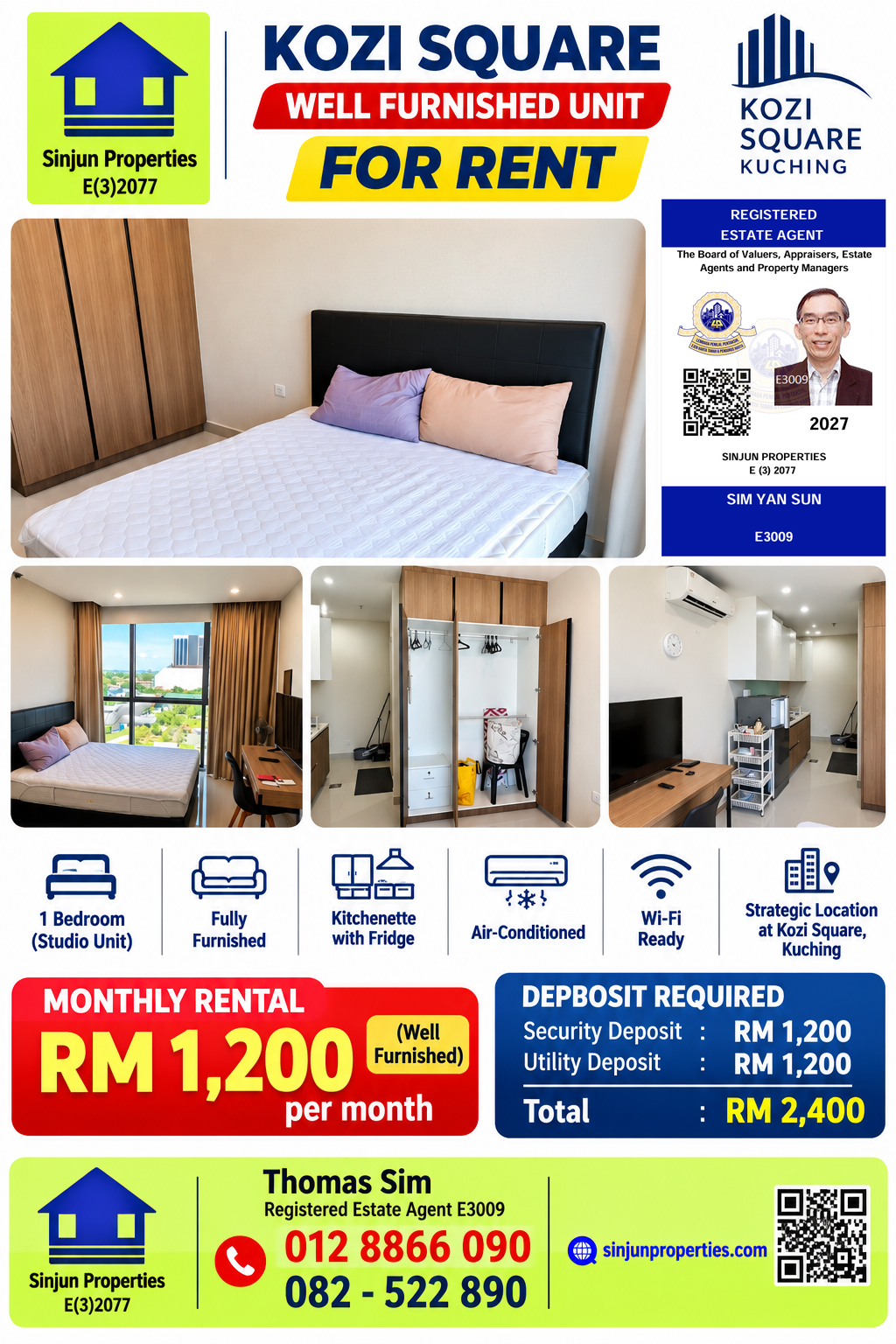
Cozy Studio Apartment for Rent at Kozi Square, Kuching

PROPERTY INFORMATION SUMMARY

1. Property Location
– Property Name: Kozi Square
– Address: Not stated in the supplied image
– Neighbourhood: Kozi Square
– Location: Kuching

2. Property Price / Rental Price
– Monthly Rental: RM 1,200 per month
– Status: For Rent

3. Property Size
– Land Area: Not stated in the supplied image
– Built-up Area: Not stated in the supplied image

4. Number of Rooms
– Bedrooms: 1 (Studio Unit)
– Other Rooms: Not stated in the supplied image

5. Number of Bathrooms and Toilets
– Bathrooms: Not stated in the supplied image
– Toilets: Not stated in the supplied image

6. Deposit to be Paid
– Security Deposit: RM 1,200
– Utility Deposit: RM 1,200
– Total Deposit Required: RM 2,400

### ADDITIONAL PROPERTY FEATURES

– Property Type: Studio Unit (Apartment/Condominium)
– Furnishing Status: Fully Furnished
– Number of Car Parks: Not stated in the supplied image
– Living and Dining Areas: Not stated in the supplied image
– Kitchen Facilities: Kitchenette with fridge
– Air-Conditioned: Yes
– Wi-Fi Ready: Yes
– Condominium Facilities: Not stated in the supplied image
– Security Features: Not stated in the supplied image
– Strategic Location at Kozi Square, Kuching

—

For professional property advice and assistance, please contact:

Estate Agent Details
– Name: Thomas Sim
– Professional Designation & Registration Number: Registered Estate Agent E3009
– Mobile Telephone Number: 012 8866 090

Estate Agency Details
– Estate Agency Business Name: Sinjun Properties
– Estate Agency Registration Number: E(3)2077
– Agency Office Telephone Number: 082 – 522 890
– Website: sinjunproperties.com

Other contact information: Not stated in the supplied image.

Disclaimer: The photographs and information herein may not be the exact replica of the property advertised. Please obtain full details from our salesperson. Thank you.

Exploring the Sarawak Property Market: Trends and Investment Insights for 2023

Exploring the Sarawak Property Market: Trends and Investment Insights for 2023

A Comprehensive Guide to Navigating Kuching’s Real Estate Landscape

Introduction

As Sarawak’s capital, Kuching presents unique opportunities within Malaysia’s property market for investors and developers. The region’s evolving economic landscape, population growth, and urban development initiatives contribute to its attractiveness as an investment destination. This article analyzes current trends, potential yields, and crucial factors influencing property investment in Kuching and the broader Sarawak area. By understanding these dynamics, stakeholders can make informed decisions to maximize their investments in this vibrant market.

Current State of the Sarawak Property Market

The current property market in Sarawak, particularly in Kuching, reflects a gradual recovery bolstered by macroeconomic factors such as population growth, urbanization, and supportive governmental policies. According to the National Property Information Centre (NAPIC) and the Department of Valuation and Property Services (JPPH), the demand for residential and commercial properties has shown resilience amid ongoing economic adjustments. Population growth, driven by both migration and natural increase, has intensified demand for housing, particularly in urban centres.

Additionally, urbanization trends, where more people are flocking to urban areas for employment and lifestyle improvements, have propelled the need for more residential and commercial developments. As Kuching continues to evolve into a regional hub, significant investment in infrastructure and public services is observed, further enhancing its attractiveness to potential investors.

Government initiatives aimed at stimulating the property sector, such as incentives for first-time home buyers and the continued push for affordable housing, have also positively influenced market dynamics. However, the market faces challenges, including fluctuating materials costs and potential oversupply in certain segments if bullish development trends continue unchecked. This creates an opportunity for investors to enter the market strategically, focusing on areas with sustained demand and growth potential.

In summary, Sarawak’s property market is navigating through a complex landscape of opportunities and risks, with established areas poised for capital appreciation alongside new developments attracting attention from investors. Those looking to invest should monitor macroeconomic indicators closely and examine local demand-supply fundamentals to identify the most promising avenues for property investment.

Analyzing Kuching Property Trends

Kuching’s property market is witnessing dynamic shifts, primarily influenced by evolving consumer preferences and economic conditions. In 2023, residential demand remains resilient, driven by a growing urban population and robust interest from first-time buyers. The market is particularly characterized by an increasing appetite for well-located properties, especially those offering attractive amenities and lifestyle features.

Commercial developments in Kuching have also seen a notable uptick, with an emphasis on mixed-use developments that combine retail, office, and residential components. This trend reflects a broader transformation in consumer behavior, where convenience and accessibility take precedence. Investors should focus on areas undergoing revitalization, as government initiatives, such as infrastructure upgrades and economic incentives, enhance property values and rental potential.

Transaction data indicates a stable rental market with promising yields in strategic locations. Kuching’s diverse property offerings cater to varying investment strategies, allowing investors to capitalize on both residential and commercial sectors. However, it’s essential to evaluate the potential risks associated with market fluctuations and regulatory changes. Thoroughly assessing each investment’s fundamentals will be critical for optimizing return on investment in this evolving landscape.

Understanding Rental Yields in Sarawak

Understanding rental yields is crucial for any investor looking to navigate the Sarawak property market, particularly in Kuching. In this region, the rental yield can vary significantly based on property type and location. Typically, residential properties in urban areas like Kuching offer more promising yields compared to those in rural settings. Factors such as proximity to amenities, transportation links, and local economic conditions greatly influence market demand and, subsequently, the rental yields.

Generally, gross rental yields in Kuching can range from 4% to 7%, depending on various elements including property type and tenant demographics. For instance, well-located condominiums may yield higher returns than detached houses, which might require a longer leasing period. Additionally, commercial properties have distinct yield metrics, often evaluated through net rental yields that account for expenses such as maintenance and management fees.

It is essential for landlords and investors to conduct thorough due diligence when evaluating potential yields. By analysing local market trends and considering factors like rental vacancy rates and comparable properties, investors can make informed decisions that capitalise on market dynamics. Successful rental investments within Kuching often demonstrate strong demand, particularly in sought-after neighbourhoods where employment opportunities and lifestyle amenities converge.

Commercial Property Investment in Kuching

The commercial property market in Kuching presents diverse opportunities for investors looking to capitalize on the growth of Sarawak’s economy. Primarily, the sector encompasses a variety of asset classes, including office buildings, retail spaces, and industrial facilities. Recent trends indicate an increasing demand for mixed-use developments, driven by evolving consumer preferences and urbanization. Investors should note that strategic location remains a pivotal factor; properties situated near major transport hubs such as the Kuching International Airport and key commercial districts tend to yield higher returns.

Infrastructure development plays a critical role in enhancing the appeal of commercial properties. Hearteningly, recent government initiatives focusing on improving transportation networks, utilities, and communication infrastructure are expected to boost property values and rental rates in the region. For example, the Sarawakians’ efforts to enhance connectivity through the Pan Borneo Highway project have stimulated interest in commercial investments along its route, offering promising prospects for capital appreciation.

A practical approach for investors involves evaluating successful case studies of commercial properties within the region. Properties that have effectively integrated local culture and sustainability into their business models often report better tenant retention and increased footfall, providing valuable insights into effective investment strategies. Alongside these opportunities, investors should remain aware of potential risks such as market oversaturation in certain areas and the impacts of regulatory changes that could influence property performance. Nevertheless, sound due diligence and strategic decision-making can significantly enhance investment outcomes in Kuching’s dynamic commercial property landscape.

Investment Risks and Considerations

Investing in the Sarawak property market presents a range of opportunities, yet it also entails inherent risks that must be considered. Market volatility is a primary concern; fluctuations due to economic conditions can lead to unpredictable changes in property values. Additionally, an economic downturn could affect rental yields and sales prices, which are crucial for maintaining profitability. Regulatory changes in Sarawak, particularly in land administration and property laws, further complicate the investment landscape. Investors should stay informed about local policies, as compliance and market entry requirements can impact investment performance.

To mitigate these risks, diversifying one’s property portfolio across various asset classes—residential, commercial, and industrial—can provide a buffer against market fluctuations. Conducting thorough market research and analysis will enable investors to gauge supply and demand dynamics, thereby choosing properties with promising long-term viability. Establishing exit strategies, such as identifying potential buyers or tenants before entering a deal, can also help in navigating uncertainties in the market, ensuring a well-prepared approach to property investment in Sarawak.

Future Outlook for Sarawak’s Property Market

The future outlook for Sarawak’s property market is poised to undergo significant transformations, shaped by a variety of factors including infrastructure development, government initiatives, and demographic shifts. Key infrastructure projects, such as the expansion of the Pan Borneo Highway and the Sarawak Coastal Road, are expected to enhance connectivity and stimulate economic activity, thereby increasing property demand in regions adjacent to these corridors. Additionally, the Sarawak government has been proactive in rolling out policies that aim to attract foreign investment and promote sustainable development, aligning with national objectives to bolster the economy.

Demographically, Sarawak’s population growth, spurred by urbanization and migration, presents a dual opportunity for investors. On one hand, the demand for residential properties continues to rise as more individuals relocate to Kuching for employment and education. Conversely, commercial properties, especially in retail and hospitality, are forecasted to benefit from an expanding consumer base and increased spending capacity. However, investors must remain vigilant regarding potential pitfalls, such as oversupply in certain segments, regulatory changes, and economic fluctuations that may impact property values and rental yields.

In conclusion, the Sarawak property market offers promising prospects for investors who can navigate its complexities. Staying informed about upcoming projects and governmental directions will be crucial in making strategic investments that align with both current trends and future market dynamics.

Conclusion

The Sarawak property market, particularly in Kuching, offers promising prospects for both residential and commercial investments. However, potential investors must remain vigilant regarding market trends, yields, and local legislative considerations. By aligning investment strategies with these insights and acknowledging the inherent risks, property owners and prospective investors can effectively navigate this evolving landscape. Ultimately, thorough research and professional guidance are paramount in harnessing the full potential of Sarawak’s real estate opportunities.

Understanding the Sarawak Property Market: Trends and Investment Insights

Understanding the Sarawak Property Market: Trends and Investment Insights

Navigating Kuching’s Real Estate Landscape for Optimal Returns

Introduction

The Sarawak property market, particularly in Kuching, offers diverse investment opportunities spurred by economic growth, urban development, and an evolving rental landscape. This article aims to unpack key trends, assess rental yields, and provide an overview of commercial property dynamics. Investors and real estate professionals will benefit from an informed understanding of market conditions, legal considerations, and the potential for growth in various property segments. As we delve into these factors, we will highlight the implications for investors and owners navigating this unique market.

Current Landscape of the Sarawak Property Market

The Sarawak property market is currently navigating through a transformative period, particularly within the bustling capital of Kuching. Recent data from the National Property Information Centre (NAPIC) and the Department of Valuation and Property Services (JPPH) indicate a fluctuating price movement in response to evolving supply and demand dynamics within the region.

Population growth, fuelled by urban migration and an increasing birth rate, is significantly impacting property demand. Kuching, as a strategic urban centre, has enhanced its appeal with robust economic drivers, including the expansion of industries and services along with infrastructural developments like the Santubong-Samarahan Expressway. This connectivity has instigated a ripple effect in property transactions, notably in commercial shoplots and office units, like those found at “Tong Sheng Corner.”

Investors are therefore encouraged to monitor this landscape closely, as the interplay between the growth in population and economic activity continues to dictate property values and yield potential. While opportunities abound, it is essential to remain cognizant of potential pitfalls, including regional market volatility and transaction costs which can hinder ROI. Understanding the current dynamics, amidst the data-driven insights from NAPIC and JPPH, positions investors better to capitalize on emerging opportunities in the Sarawak property market.

Rental Yields in Kuching: Opportunities and Challenges

Rental yields in Kuching provide a nuanced understanding of the real estate landscape, particularly when examining the distinctions between residential and commercial properties. Historically, residential properties in Kuching have demonstrated stable rental yields, often ranging between 4% and 6%. These yields are influenced by factors such as occupancy rates, tenant demographics, and the overall economic climate, making them attractive to investors seeking steady returns.

In contrast, commercial properties, such as shoplots exemplified by Tong Sheng Corner, can present higher rental yields, often exceeding 7%. This sector benefits from factors like business growth, increased foot traffic, and a robust consumer base. However, the commercial market also faces challenges, such as fluctuating demand and longer vacancy periods compared to residential properties.

For landlords and investors, understanding these dynamics is crucial. While residential properties may offer lower yields, they typically ensure consistent income streams and lower management complexity. Conversely, commercial properties may yield greater profits but require careful market analysis to mitigate risks linked to changing market conditions and economic fluctuations. Prospective investors should diligently evaluate occupancy rates and demographic shifts when assessing potential investments in Kuching’s property market.

Investment Potential in Residential Properties

The potential for investment in Kuching’s residential property sector remains robust, driven by a combination of economic factors and governmental initiatives aimed at stimulating homeownership. Recently, sales trends indicate a steady growth in demand for both landed properties and apartment developments, reflecting a growing urban population and an increasing preference for modern living spaces. Factors such as strategic location, accessibility to amenities, and the appeal of suburban living enhance the attractiveness of these residential investments.

Government incentives for homebuyers, such as grants and stamp duty exemptions, have further bolstered market confidence, making it more affordable for first-time buyers to enter the market. Investors can expect favorable rental yields, particularly in well-located developments with conducive living environments. Furthermore, capital appreciation potential remains strong due to limited land availability in key areas. However, it is crucial to conduct thorough due diligence, taking into account market cycles and potential risks associated with property investments in this dynamic landscape.

Commercial Property Trends in Sarawak

The commercial property market in Sarawak, particularly in Kuching, is currently experiencing a dynamic transformation influenced by various factors, including broader economic shifts and the rise of e-commerce. Retail spaces are increasingly adapting to changes in consumer behaviour, with a noticeable impact on leasing trends. As online shopping continues to gain traction, brick-and-mortar retailers must innovate to remain attractive, leading to an oversupply of conventional retail units in less strategic locations.

In contrast, strategically located shoplots, such as those at “Tong Sheng Corner,” offer unique opportunities for investors seeking to capitalise on foot traffic and local business synergy. The office space segment is witnessing fluctuations, with many businesses opting for flexible work arrangements, affecting demand. However, quality office spaces with adequate amenities maintain their attractiveness, especially those that can accommodate hybrid work models.

Industrial properties are also gaining momentum, driven by logistics and warehousing needs due to an increase in online retail. Investors should monitor emerging industrial parks and distribution centres to leverage their potential for capital appreciation. Overall, while there are bright spots, the commercial market also presents risks, necessitating thorough due diligence regarding market saturation, tenant profiles, and location viability for sustainable investment returns.

Land Development Opportunities: A Growing Frontier

As the Sarawak property market continues to develop, particularly in Kuching, prospective investors and developers must closely assess available land development opportunities. Kuching, with its strategic location and growing infrastructure, presents fertile grounds for both agricultural and commercial development. Understanding the legislative landscape, especially the Sarawak Land Code, is crucial for navigating the complexities of land use and zoning laws.

The Sarawak State Government has been proactive in identifying growth corridors that are essential for enhancing regional development. Areas earmarked for development often benefit from improved transportation links and essential amenities, making them attractive to investors. Additionally, understanding land classification is key; properties categorized as development land typically yield greater returns compared to agricultural plots, especially given the increasing demand for residential and commercial spaces in urban settings.

Investors should be mindful of zoning restrictions as they can significantly impact development potential and project viability. It’s also imperative to consider the market’s supply and demand dynamics: areas with limited available land are poised for capital appreciation. This underscores the potential for substantial returns, though diligence in feasibility studies and an awareness of the risks involved remain paramount for ensuring successful investment outcomes.

Navigating Investment Risks in the Sarawak Property Market

Investing in the Sarawak property market, particularly in Kuching, presents a mix of opportunities and risks that require careful consideration. Key risks include regulatory changes, which can affect property laws and development approvals, particularly given the unique legislative framework under the Sarawak Land Code. Economic fluctuations pose another significant risk; changes in local employment rates and consumer sentiment can directly influence property demand and rental yields.

Market saturation is also a concern, especially in certain segments such as residential properties and retail spaces. Investors must be wary of oversupply, which can lead to decreased rental rates and property values. To mitigate these risks, it is crucial to conduct thorough market research, focusing on the supply-demand dynamics and the economic indicators that influence investor confidence.

Furthermore, diversifying investments across different asset classes—residential, commercial, or industrial—can enhance risk management. Investors should also keep an eye on prevailing interest rates, as financing costs play a pivotal role in determining cash flow and overall returns. By understanding these factors and adopting a proactive approach to investment strategies, investors can navigate the complexities of the Sarawak property market more effectively, ensuring the security and potential growth of their portfolios.

Conclusion

The Sarawak property market presents an array of opportunities accompanied by challenges. As Kuching continues to develop, informed investors may find significant potential in both residential and commercial properties. However, understanding local legislation, market dynamics, and associated risks is crucial. We recommend conducting thorough due diligence and consulting with professionals before making investment decisions to optimize returns in this evolving landscape.

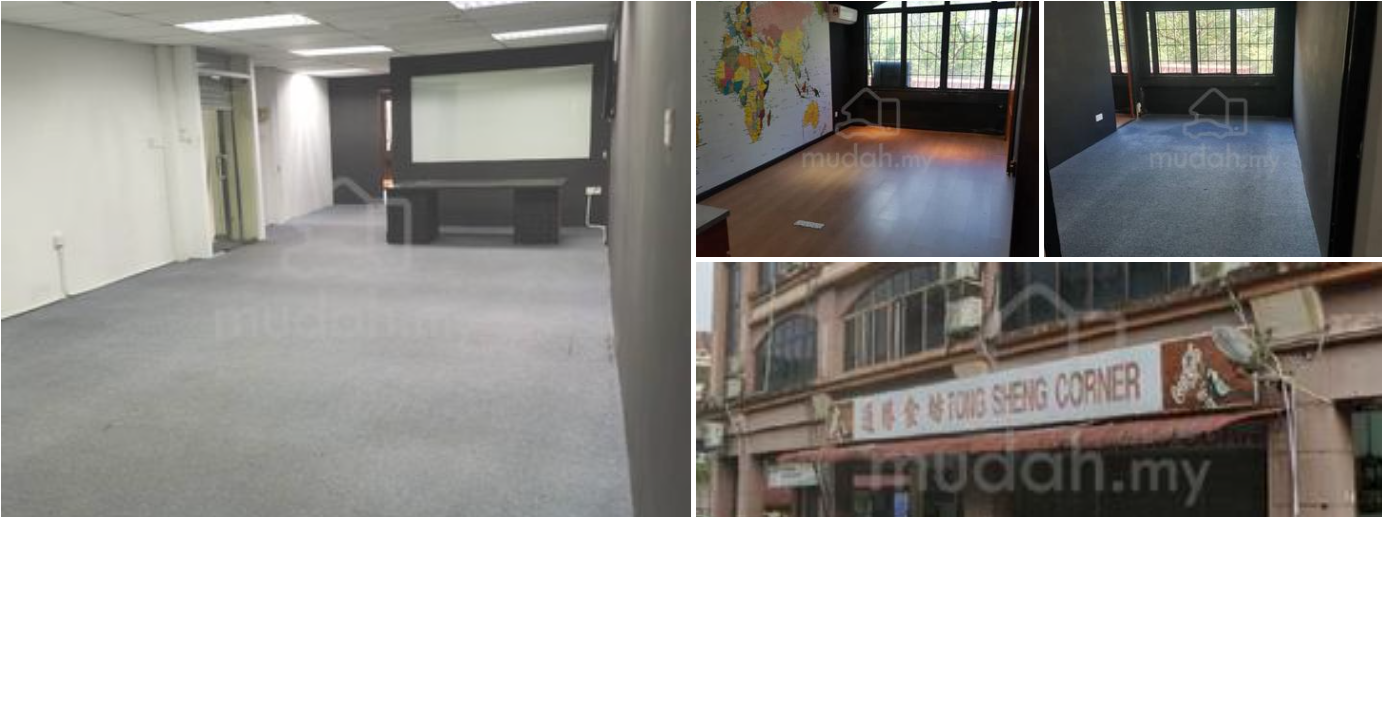
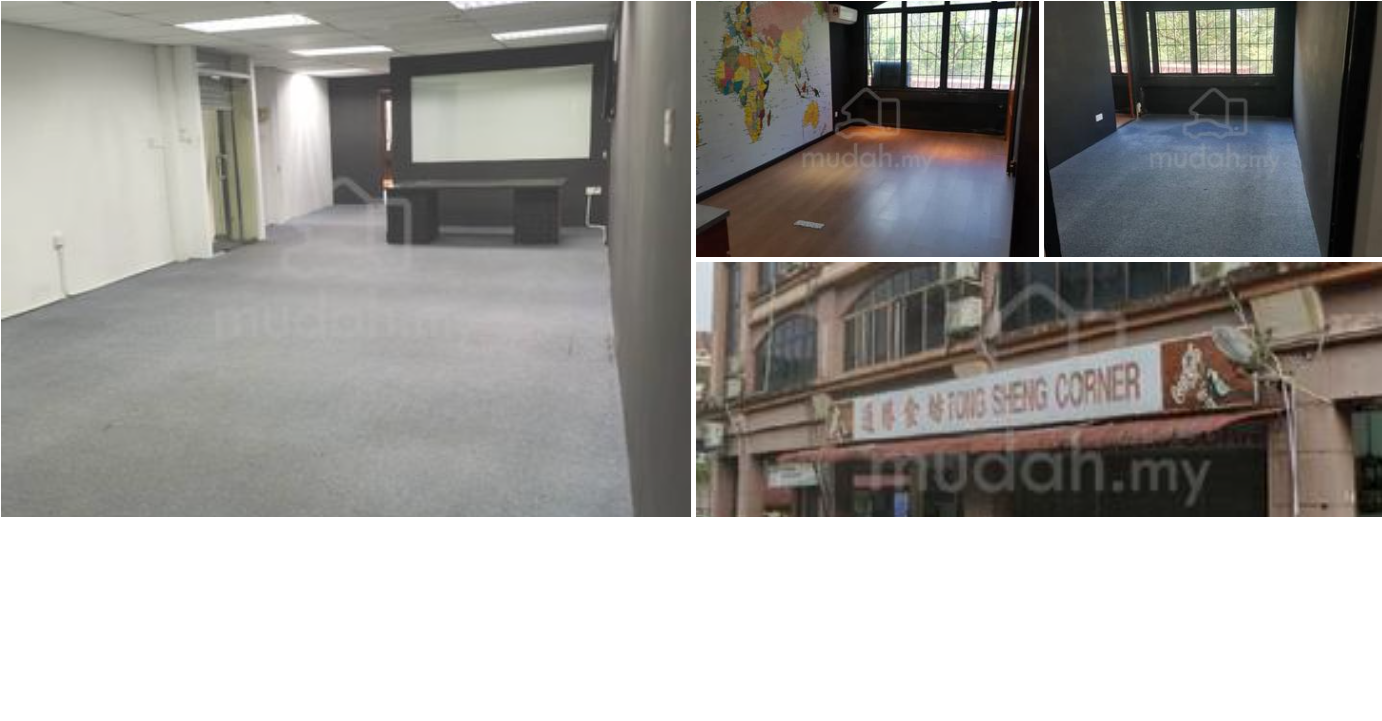
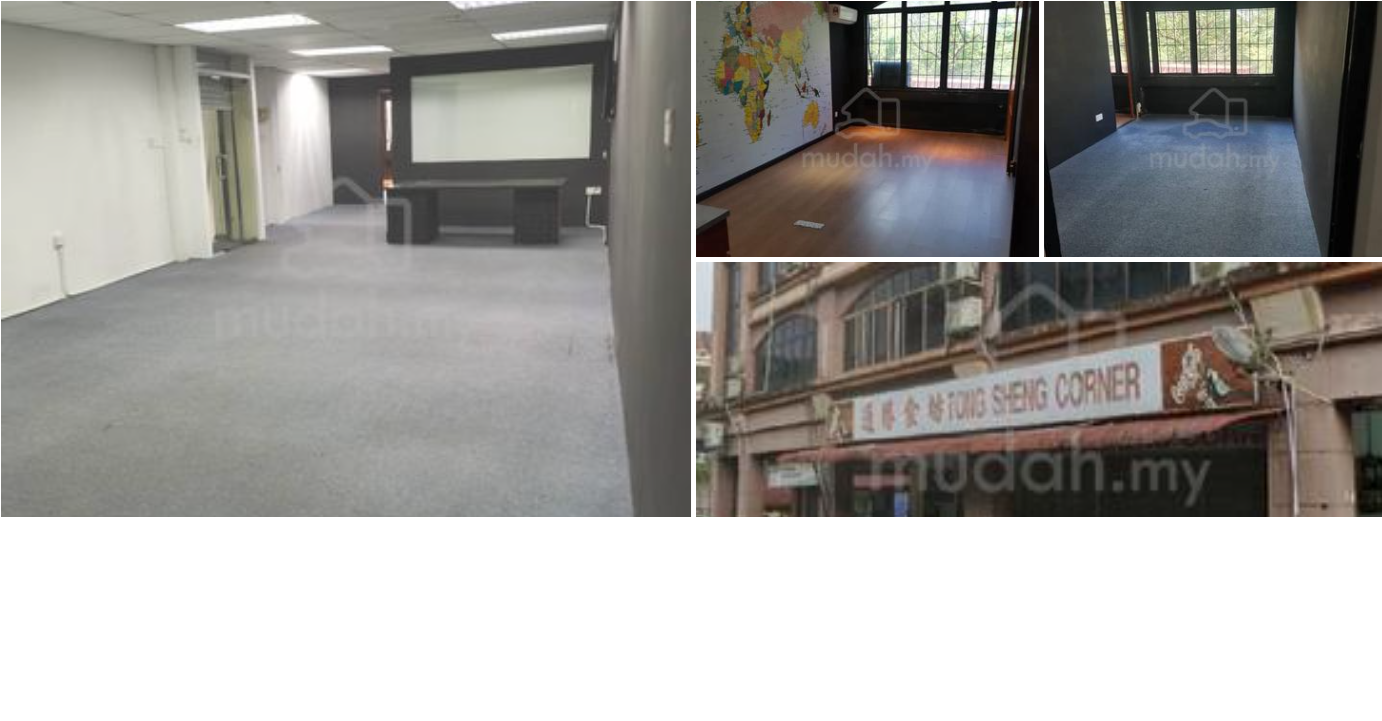
Explore This Unnamed Property at Tong Sheng Corner

PROPERTY INFORMATION SUMMARY

1. Property Location
– Property name: Not stated in the supplied image
– Address: Not stated in the supplied image
– Neighbourhood: Not stated in the supplied image
– Location: The image includes a sign reading “TONG SHENG CORNER” but further property address details are not stated in the supplied image.

2. Property Price / Rental Price
– Not stated in the supplied image

3. Property Size
– Land area: Not stated in the supplied image
– Built-up area: Not stated in the supplied image

4. Number of Rooms
– Number of bedrooms: Not stated in the supplied image
– Other rooms: Not stated in the supplied image

5. Number of Bathrooms and Toilets
– Bathrooms: Not stated in the supplied image
– Toilets: Not stated in the supplied image

6. Deposit to be Paid
– Not stated in the supplied image

ADDITIONAL PROPERTY FEATURES

– Property type: Not explicitly stated (images suggest a commercial or office property type, but this requires confirmation)
– Furnishing status: Not stated in the supplied image
– Number of car parks: Not stated in the supplied image
– Living and dining areas: Not stated in the supplied image
– Kitchen facilities: Not stated in the supplied image
– Condominium facilities: Not stated in the supplied image
– Security features: Not stated in the supplied image

For professional property advice and assistance, please contact:

*Estate Agent Details*
Not stated in the supplied image

*Estate Agency Details*
Not stated in the supplied image

Note: The supplied image does not contain any visible estate agent or agency contact information, nor does it provide clear details on the property size, price, location, number of rooms, or other key features. For further information, please refer directly to the original listing or contact the property advertiser via the platform where the property was found.

Disclaimer: The photographs and information herein may not be the exact replica of the property advertised. Please obtain full details from our salesperson. Thank you.

Shop Lot for Sale or Rent at TONG SHENG CORNER

Discover a remarkable opportunity with this shop lot located at TONG SHENG CORNER. This property offers flexibility for commercial operations and is ready for your business dreams. While specific details such as address and pricing are not provided, the potential awaits your vision in this dynamic location.

undefined

[object Object]

undefined

[object Object]

undefined

[object Object]

undefined

[object Object]

undefined

[object Object]

undefined

[object Object]

Conclusions

For professional property advice and assistance, please contact:

Thomas Sim
Registered Estate Agent: E3009
Mobile: 012 8866 090

Sinjun Properties
Agency Registration: E(3)2077
Tel: 082 522 890

Exploring the Sarawak Property Market: Trends and Investment Opportunities

Exploring the Sarawak Property Market: Trends and Investment Opportunities

Navigating Kuching’s Property Landscape for Profitable Investments

Introduction

The Sarawak property market has demonstrated unique characteristics in recent years, particularly in Kuching, where residential and commercial opportunities abound. With the region’s diverse economic activities and evolving infrastructure, investors are increasingly attracted to its potential. This article delves into the current trends, investment prospects, and essential insights for property stakeholders in Sarawak, equipping them with the knowledge needed to make informed decisions.

Chapter 1: The Sarawak Property Market Overview

The Sarawak property market has recently shown dynamic and evolving trends, significantly influenced by economic recovery post-pandemic and ongoing infrastructural developments. According to the National Property Information Centre (NAPIC), property transaction volumes in Sarawak have fluctuated but have generally shown an uptick, signaling renewed investor confidence. Key economic indicators, including Gross Domestic Product (GDP) growth and employment rates reported by the Department of Statistics Malaysia (DOSM), have played a crucial role in this resurgence. For instance, a burgeoning job market, particularly in sectors like construction and services, has directly impacted housing demand as more individuals seek accommodations closer to their workplaces.

Furthermore, major infrastructure projects, such as the Pan Borneo Highway, are enhancing connectivity across the state, thus driving interest in previously underdeveloped areas. This not only boosts property values but also incentivizes developers to explore new projects in strategic locations. Demographic shifts, particularly urban migration towards Kuching from rural areas, indicate a changing landscape of property demand. Investors should note that while residential properties remain a stable investment, there is an increasing interest in commercial real estate, particularly shop lots and office spaces, driven by a growing middle class and entrepreneurial spirit.

Nonetheless, potential investors must remain cognizant of the risks associated with financial fluctuations, such as rising interest rates, which could impact purchasing power and rental yields. With ongoing developments and demographic changes, the Sarawak property market presents both opportunities and challenges. Investors are advised to conduct thorough due diligence, monitor market trends, and analyze property performance metrics such as gross rental yields and capital appreciation potential to navigate this evolving landscape effectively.

Chapter 2: Residential Property Trends in Kuching

The residential property market in Kuching has shown dynamic trends, largely influenced by local economic conditions, government policies, and shifting buyer preferences. In recent times, property prices have generally remained stable, yet specific segments have exhibited notable growth. Landed homes, appealing for young families and retirees, have seen increased demand, particularly in suburban areas where infrastructure improvements have enhanced accessibility. Conversely, high-rise developments are gaining traction among urban professionals seeking conveniences associated with apartment living.

Recent transaction data from the Sarawak state government indicates a steady increase in the volume of transactions for residential properties, particularly in emerging neighborhoods like Bintulu and Miri. This trend suggests that buyers are increasingly favoring locations offering a balanced lifestyle, with proximity to amenities and recreational spaces. Buyers are particularly attracted to developments incorporating modern lifestyle features and sustainable practices, reflecting a broader global trend towards environmental consciousness.

Government incentives, such as the Home Ownership Campaign, have further stimulated buyer interest, particularly among first-time buyers. These initiatives aim to make homeownership more attainable, thereby potentially impacting the rental market as increasing numbers of first-time buyers transition from renting to ownership. This shift could lead to reduced demand in the rental segment, creating opportunities for cautious investors to acquire properties at more competitive prices.

Nevertheless, existing homeowners should remain vigilant, as market fluctuations can affect property values. Investors analyzing these trends should consider not only the immediate market conditions but also the broader economic indicators, such as employment rates and infrastructure developments, that influence property performance. Understanding these nuances will help both first-time buyers and seasoned investors navigate Kuching’s residential landscape with greater confidence.

Chapter 3: Commercial Property Opportunities

The commercial property landscape in Sarawak, particularly in Kuching, presents a mix of challenges and opportunities for savvy investors. In recent years, Kuching has seen gradual growth in its commercial sector, spurred by ongoing urban development and an increasing demand for office spaces and retail establishments. Notably, rental yields for commercial properties in urban areas have varied but typically range from 6% to 8% depending on location and property type, with prime commercial spaces achieving higher returns.

As businesses adapt to post-pandemic realities, the demand for flexible office spaces continues to rise. This trend has prompted a shift towards mixed-use developments that integrate residential, commercial, and recreational facilities to create self-sustaining environments. Such developments not only attract diverse tenants but also provide resilience against economic fluctuations.

However, investors must remain vigilant regarding potential risks, including economic downturns that can affect occupancy rates. While overall vacancy rates in Kuching have stabilized, certain segments, particularly retail, have struggled due to changing consumer habits towards online shopping. Upcoming government initiatives aimed at enhancing infrastructure and improving connectivity will play a pivotal role in shaping the future of commercial property investments in the region.

For those considering entry into this segment, an assessment of property valuation and market comparables is crucial. The balance between demand and supply fundamentals, as well as understanding land tenure and classification under the Sarawak Land Code, are essential for making informed investment decisions. Recognizing the long-term implications of these factors will enhance the likelihood of achieving successful investment outcomes in Kuching’s dynamic commercial property market.

Chapter 4: Rental Market Dynamics

The rental market in Kuching is characterized by its diverse offerings, ranging from serviced residences to traditional homes and commercial shoplots. This variety allows for different tenant demographics, each with unique preferences that influence rental yields. According to the Sarawak Land and Survey Department, while the rental prices have shown resilient trends, demand for apartments remains particularly strong due to their accessibility and amenities, catering to the growing expatriate and local workforce population.

Current rental rates for residential properties in Kuching have stabilized, with yields typically ranging from 4% to 6%, depending on location and property type. Popular areas, such as Bandar Semariang and the vicinity of the Kuching International Airport, tend to command higher rental yields due to increased demand and limited supply. In contrast, traditional homes in suburban areas exhibit lower yields, reflecting a shift in tenant preferences towards modern living spaces.

The advent of digital platforms for short-term rentals has also reshaped the Kuching rental landscape. Properties listed on platforms like Airbnb and GrabHousing have emerged as a lucrative option for landlords, especially in tourist hotspots. However, this segment comes with its own challenges, particularly concerning regulations and fluctuating demand patterns influenced by tourism trends.

Landlords should therefore consider enhancing their rental strategies by investing in property upgrades and leveraging technology for property management. Providing flexible leasing terms, incorporating smart home features, and addressing tenant concerns promptly can significantly enhance tenant satisfaction and reduce vacancy rates. Understanding the market dynamics, ongoing trends, and tenant preferences is crucial for optimizing returns in the competitive Kuching rental market.

Chapter 5: Navigating Risks and Limitations in Sarawak Property Investment

Investing in the Sarawak property market entails navigating various risks and uncertainties that could impact potential returns. One of the predominant challenges is market saturation, particularly in certain segments like residential and commercial properties in urban areas such as Kuching. As developers increase their supply in response to rising demand, there is a risk of oversupply, which could lead to declining prices and decreased rental yields.

Price volatility also poses a significant concern for investors. Fluctuations in property values can be influenced by various factors, including economic conditions, governmental policies, and shifts in consumer sentiment. Market cycles in Sarawak can sometimes lag behind more developed regions, making timing critical when entering or exiting investments.

Additionally, regulatory hurdles unique to Sarawak, such as land tenure complications and compliance with the Sarawak Land Code, demand thorough due diligence. Investors must familiarize themselves with local land laws and the property valuation methods that are applied within the state, as these can differ significantly from other Malaysian states governed by the National Land Code.

To mitigate risks, investors need to conduct comprehensive market research and analysis, evaluating property performance relative to comparable assets. A diversified portfolio can serve to cushion against market fluctuations while also enabling investors to capitalize on emerging opportunities in less saturated sectors. Staying informed on macroeconomic indicators, market trends, and local demographics will empower investors to make informed decisions that enhance their chances of success in Sarawak’s dynamic property landscape.

Conclusion

As the Sarawak property market adapts to both local and national economic conditions, investors and property owners should remain vigilant and informed. While opportunities exist across residential and commercial segments, careful consideration of each asset class is vital. By understanding the current market trends, potential risks, and the specific attributes of the Kuching property landscape, stakeholders can enhance their investment strategies and achieve sustainable growth. Continuous monitoring of market dynamics and legislative developments will further enable investors to optimize their property portfolios.